
Culture
Cannabis and the law in South Africa: a plain-language guide
From the 2018 Constitutional Court ruling to the Cannabis for Private Purposes Act — what is actually legal, and where a private club fits in.
24 July 20267 min readSeknd Nature Collective
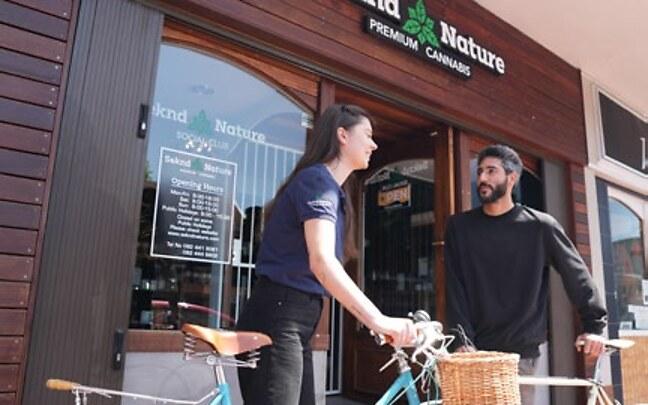
Few subjects generate more confident misinformation at a braai than cannabis law. “It’s legal now” and “it’s still completely illegal” are both wrong, and the truth sits in a narrow, very specific lane. Here is the plain-language version — not legal advice, but an honest map of the terrain the collective operates in.
Prince, 2018: privacy changed everything
The Constitutional Court did not legalise cannabis. It protected the private adult.
In September 2018 the Constitutional Court handed down the *Prince* judgment: criminalising the private use, possession and cultivation of cannabis by adults violates the constitutional right to privacy. From that day, an adult using or growing cannabis in private has not been committing an offence.
What the judgment deliberately did not do is create a market. Buying and selling remained illegal, no quantities were defined, and Parliament was told to fix the details. That gap — private use protected, commerce prohibited — defined South African cannabis life for the next six years.
The Cannabis for Private Purposes Act, 2024
The first statute on the continent to regulate private adult cannabis use.
In May 2024 the Cannabis for Private Purposes Act was signed into law. It writes the *Prince* principles into statute: adults may possess and cultivate cannabis for private purposes, may share it with other adults without payment, and records of old possession convictions can be expunged.
The Act is equally clear about what stays prohibited: dealing remains a crime. There is no retail licence, no dispensary framework, no legal storefront selling cannabis to the public. Public consumption and any supply to minors are offences, full stop.
So where does a private club fit?
The collective model lives inside the private sphere the law protects.
Private members’ collectives like Seknd Nature exist in the space the law carved out: a closed circle of verified adults exercising their private-use rights together, rather than a shop selling to whoever walks in. Membership is vetted and 18+, access is private, and every member operates within personal allocation limits the club enforces — deliberately conservative, tracked, and auditable.
That is why you will never see a public till at a Seknd Nature branch, why membership comes before any access to the collection, and why we would rather turn someone away than blur the line. The model only works because the line is respected.
One more distinction worth knowing: none of this is the *medical* route. Prescription cannabis under SAHPRA authorisation is a separate, regulated pathway — we unpack the difference in our medical-vs-club guide.
The short version
- Private adult use, possession and cultivation: protected since 2018, codified in 2024.
- Buying and selling to the public: still illegal — there are no licensed dispensaries.
- Sharing between adults without payment: permitted in private.
- Public consumption and anything involving minors: offences.
- Private members’ collectives: a closed-circle model built on the private sphere the law protects.
This guide is general information, not legal advice. The collective keeps its own counsel close and its records closer.
Taste the story
The collection this journal writes about is a membership away.
Keep reading
Related stories
- Culture

Medical cannabis vs the private club route in South Africa
SAHPRA, Section 21 and prescriptions on one side; the private members’ collective on the other. How the two routes differ, honestly.
22 July 20266 min read
- Culture
Why South Africa has clubs, not dispensaries
Searching for a “dispensary near me” in South Africa finds something else entirely. Here is why — and why the club model is the honest answer.
18 July 20265 min read
- Culture

Winding down: evening rituals for proper rest
The collective’s companion piece to slow evenings — building an end-of-day ritual that actually lets the day end.
5 July 20265 min read